
What is an Albino Turtle?
Definition of Albino Turtles
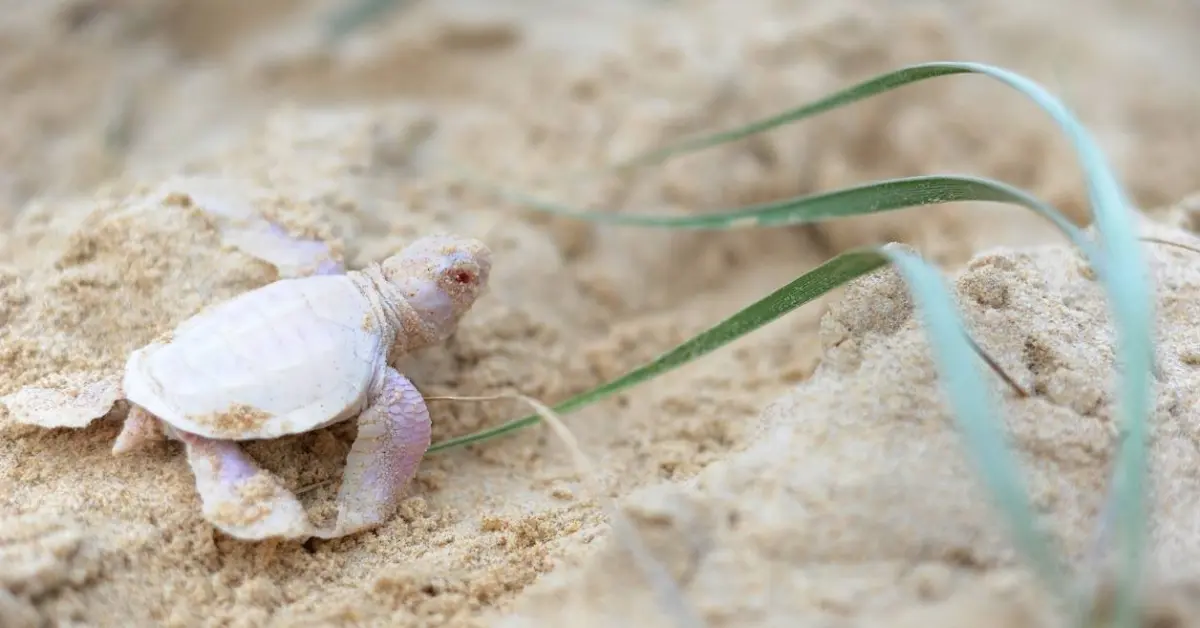
An albino turtle is a turtle born with a rare genetic condition that prevents its body from producing melanin, the pigment responsible for darker colors in skin, shell, and eyes. Because of this lack of pigment, albino turtles appear pale yellow, cream, or completely white with striking pink or red eyes. They are considered one of the rarest turtle variations in the world and are highly sought after both for research and as exotic pets.
Difference Between Albino and Leucistic Turtles
While people often confuse albino turtles with leucistic turtles, the two conditions are not the same.
- Albino turtles have no melanin at all, resulting in lighter shells, skin, and eyes.
- Leucistic turtles, on the other hand, have a partial loss of pigmentation. They may look pale or washed-out, but their eyes usually remain dark, which helps distinguish them from true albinos.
This distinction is important for breeders, researchers, and collectors who often categorize turtles based on these unique genetic traits.
Why Albinism Occurs (Turtle Genetics and Mutations)
Albinism in turtles, just like in other reptiles and mammals, is the result of a genetic mutation. Specifically, it occurs when the gene responsible for producing melanin is either missing or altered. This mutation is inherited, meaning albino turtles are usually born when both parents carry the recessive gene for albinism.
However, this condition also makes albino turtles more vulnerable in the wild. Without natural camouflage, they are easily spotted by predators. Their lighter shells can also increase sensitivity to sunlight, creating additional survival challenges.
Related Terms: White Turtle, Rare Turtle Mutation
Albino turtles are sometimes referred to as “white turtles” due to their unique appearance. They are also categorized under broader terms like “rare turtle mutation” or “albino reptile”, placing them in the same group as other rare color morphs found in lizards, snakes, and tortoises.
Types of Albino Turtles Found Around the World
Albino turtles are not limited to a single species. Albinism can appear in different turtle families, though it remains rare. Below are some of the most recognized types of albino turtles seen in the wild and in captivity.
Albino Red-Eared Slider (Albino Slider Turtle)
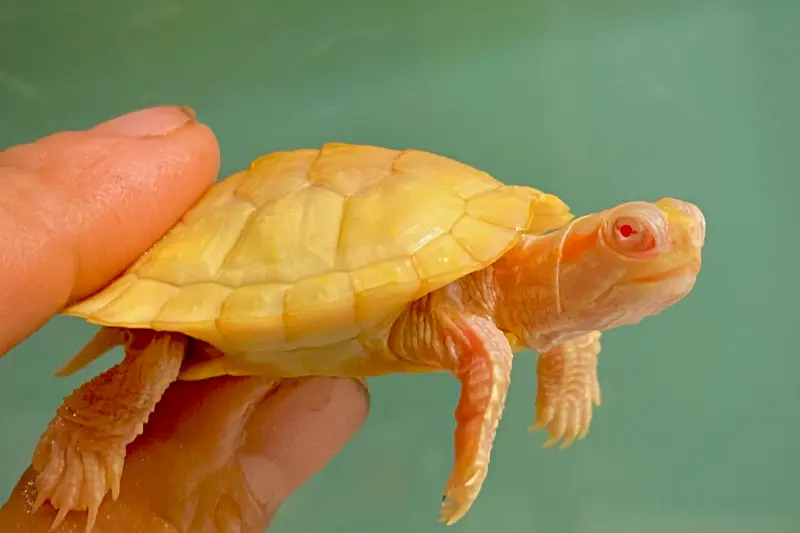
The albino red-eared slider is the most commonly encountered albino turtle in the pet trade. Known scientifically as Trachemys scripta elegans, this freshwater species is already popular in its normal green form, making the albino version a highly sought-after morph.
- Appearance: Yellow or cream-colored shell with faint orange markings; pinkish eyes.
- Popularity: Frequently bred for collectors and pet enthusiasts.
- Competitor keywords integrated: albino red eared slider, albino slider turtle.
Albino red-eared sliders are often mistaken for leucistic sliders, but their lack of dark pigments and pink eyes confirm their albino status.
Albino Sea Turtle
Albino sea turtles are among the rarest albino reptiles ever sighted. They occasionally appear in species such as the green sea turtle (Chelonia mydas) or loggerhead (Caretta caretta).
- Rarity: Extremely uncommon, with only a handful of documented cases worldwide.
- Survival challenges: Their white or yellowish shells make them easy targets for predators. Additionally, exposure to sunlight without natural pigmentation increases health risks.
- Conservation note: Any recorded albina sea turtle sighting quickly becomes a global news story due to its rarity.
This type represents the most vulnerable form of albino turtle in the wild.
Albino Snapping Turtle and Albino Softshell Turtle
Both albino snapping turtles (Chelydra serpentina) and albino softshell turtles (Apalone spp.) are striking examples of rare turtle mutations.
- Albino snapping turtle: Known for its powerful jaws and aggressive nature; in albino form, its pale yellow shell and pinkish skin make it a unique find.
- Albino softshell turtle: Identified by its flat, pancake-like body; an albino variant looks almost ghostlike due to its thin, pale skin.
These species are less common in captivity compared to albino red-eared sliders, making them prized among collectors of unusual pet reptiles.
Albino Tortoise
Although tortoises are technically distinct from turtles, albino tortoises are often grouped into discussions of albino reptiles. They are especially popular among exotic turtle pets collectors, with albino sulcata tortoises being one of the most frequently bred morphs.
- Difference from turtles: Tortoises are land-dwelling, with dome-shaped shells and herbivorous diets, unlike aquatic albino turtles.
- Collectibility: Their unique look and manageable size make them one of the most purchased albino reptiles on the market.
How Rare Are Albino Turtles?
Albino turtles are considered one of the rarest reptile variations on Earth. Their scarcity is due to the unique genetic mutations required for albinism, combined with the survival challenges that limit their numbers in the wild.
Statistics and Rarity Levels
While exact figures are difficult to calculate, researchers estimate that only 1 in several thousand turtles may be born with albinism. Of those, very few survive to adulthood because of their vulnerability to predators and environmental conditions.
- In the wild: Albino turtles are rarely seen because their pale coloring makes them stand out instead of blending into their habitat.
- In captivity: They are slightly more common, especially albino red-eared sliders, due to controlled breeding programs that increase the chance of albino offspring.
This explains why albino turtles are often classified under the broader category of rare albino animals, alongside albino snakes, lizards, and other reptiles.
Case Studies of Rare Albino Animals
There have been occasional reports of albino sea turtles hatching on beaches in Australia, India, and the United States. These rare turtle sightings often attract media attention, as conservationists highlight the challenges such hatchlings face. Unfortunately, most do not survive beyond their first year due to predation and lack of natural camouflage.
Similarly, cases of albino snapping turtles and softshell turtles are documented mainly by breeders or reptile enthusiasts rather than in the wild. Their uniqueness makes them valuable, but it also highlights just how unusual these genetic variations truly are.
Challenges of Albino Turtles in the Wild vs. Captivity
Albino turtles’ rarity is not just about genetics but also survival odds:
- Wild: High mortality rates due to visibility to predators, sensitivity to UV light, and difficulty adapting to natural environments.
- Captivity: Better survival rates, with controlled diets, protected habitats, and specialized care that helps them live longer and healthier lives.
This contrast explains why albino turtles are more frequently encountered as exotic turtle pets than in natural habitats.
| Species | Habitat | Rarity in Wild | Rarity in Captivity | Notes |
|---|---|---|---|---|
| Albino Red-Eared Slider | Freshwater ponds/rivers | Rare | Moderate (bred in captivity) | Most common albino pet turtle |
| Albino Sea Turtle | Oceans/beaches | Extremely rare | Almost none | Very low survival rates |
| Albino Snapping Turtle | Freshwater lakes/streams | Rare | Rare | Highly prized by collectors |
| Albino Softshell Turtle | Rivers, wetlands | Very rare | Rare | Unusual ghostlike appearance |
| Albino Tortoise | Terrestrial (land) | Rare | Moderate (bred often) | Popular exotic pet reptile |
Albino Turtle Lifespan and Care
Albino turtles may look fragile because of their pale shells and pink eyes, but with proper care, they can live long, healthy lives. However, their lifespan and health depend heavily on whether they live in the wild or in captivity.
Lifespan in Captivity vs. Wild
The average lifespan of an albino turtle mirrors that of its normal-colored counterpart, but survival rates differ greatly between wild and captive environments.
- In the wild: Albino turtles face numerous challenges. Their bright white or yellowish coloring makes them easy targets for predators. Without the natural camouflage of darker shells, their survival chances drop significantly. Many albino sea turtles, for example, rarely make it past their juvenile years.
- In captivity: When provided with proper care, albino turtles can live for decades. Albino red-eared sliders often reach 20–30 years, while albino tortoises can exceed 50 years. Safe environments remove many of the risks that wild albino turtles face.
Albino Turtle Care Basics
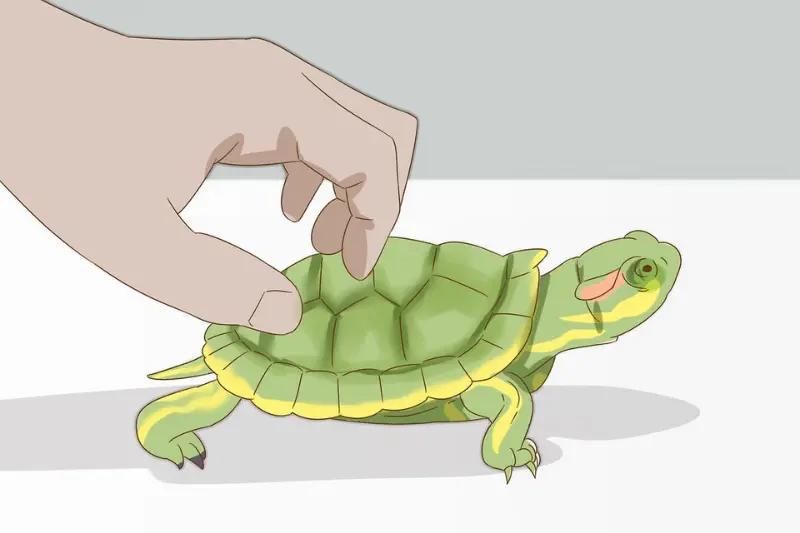
Caring for an albino turtle requires attention to detail, as their lack of melanin makes them more sensitive than regular turtles.
Top 5 Care Essentials for Albino Turtles:
- Proper UV Lighting – Albino turtles need UVB lighting for healthy shell and bone development, but it must be carefully regulated to avoid overexposure.
- Balanced Diet – Fresh greens, aquatic plants, insects, and high-quality pellets ensure proper nutrition.
- Clean Water Habitat – Filtration is critical since albino turtles are more prone to infections.
- Temperature Control – A basking area between 85–90°F and water kept around 75–80°F is ideal.
- Minimal Stress – Avoid handling albino turtles too often, as stress can weaken their immune system.
These basics form the foundation of albino turtle care, especially for pet owners who want to keep them healthy long-term.
Common Health Concerns in Albino Turtles
Albino turtles can thrive in captivity, but they are more prone to certain health challenges compared to non-albino turtles:
- Sunlight Sensitivity: Without protective pigmentation, albino turtles are prone to sunburn and must be shielded from direct UV exposure.
- Vision Problems: Their pink or reddish eyes are more sensitive to light, which can affect their ability to hunt or feed in the wild.
- Breeding Challenges: Because albinism is caused by recessive genes, albino turtle breeding often requires careful planning, making them rare in the pet trade.
For these reasons, albino turtle care demands more diligence than caring for a regular turtle. Pet owners need to balance the turtle’s needs with awareness of its unique vulnerabilities.
Albino Turtle for Sale – What to Know Before Buying
Albino turtles are not just rare animals; they are also among the most sought-after exotic reptiles in the pet trade. Before purchasing one, it is important to understand the legal, ethical, and financial aspects of owning such a unique creature.
Legal and Ethical Considerations
Owning an albino turtle is legal in many regions, but laws vary depending on species. For example:
- Albino red-eared sliders are widely bred and sold, but in some states and countries, red-eared sliders in general are regulated due to their invasive nature.
- Albino sea turtles and other endangered species cannot be bought or sold legally; they are strictly protected by wildlife laws.
From an ethical standpoint, buying albino turtles should always be done responsibly. Supporting illegal wildlife trade not only endangers turtle populations but also encourages harmful breeding practices. Responsible buyers should ensure their turtle comes from a reputable breeder.
Pricing Ranges and Why They’re Expensive
Albino turtles can be significantly more expensive than normal turtles because of their rarity and the difficulty in breeding them. Prices vary depending on species, age, and availability.
- Albino red-eared slider: Often priced between $300 and $1,000, depending on size and coloration.
- Albino snapping turtle: Can range from $1,000 to $5,000 due to its rarity.
- Albino tortoise (e.g., sulcata): Frequently sold for $2,000 to $7,000 or more, depending on breeder reputation.
The high cost is tied to genetics—since albinism requires both parents to carry the recessive gene, producing albino offspring is never guaranteed.
Trusted Breeders vs. Illegal Trade
Anyone considering purchasing an albino turtle should be cautious about where it comes from.
Reputable breeders will:
- Provide health certificates and proof of captive breeding.
- Offer care guidance specific to albino turtles.
- Ensure compliance with local reptile trade regulations.
Illegal sellers often:
- Capture turtles from the wild, reducing already vulnerable populations.
- Sell without documentation or health checks.
- Mislabel leucistic turtles as albino to inflate prices.
By choosing a trusted source, buyers help protect turtle populations while ensuring their pet is healthy and legally obtained.
Symbolism and Cultural Significance of Albino Turtles
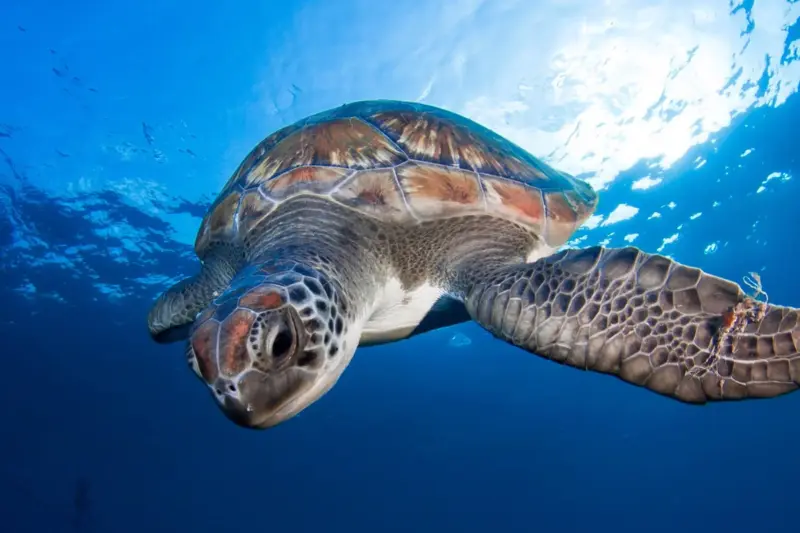
Albino turtles are not only biologically rare but also culturally fascinating. Throughout history, unusual animals with striking appearances have carried symbolic meaning, and albino turtles are no exception.
Historical References and Myths
In various cultures, turtles are seen as symbols of longevity, wisdom, and protection. When a turtle is born with albinism, its rarity often elevates it to a spiritual or mystical status.
- In some Indigenous traditions, a pale or white turtle has been regarded as a good omen, symbolizing purity and transformation.
- In parts of Asia, rare albino animals—including turtles—have historically been linked to divine messages or signs of prosperity.
- Conversely, some cultures once viewed albinism as a curse or unnatural occurrence, adding layers of mystery to the albino turtle’s identity.
Albino Turtle Symbolism in Different Cultures
Albino turtles embody multiple layers of symbolism, often depending on context:
- Purity and Rarity: Because of their pale coloring, albino turtles are associated with innocence, uniqueness, and extraordinary luck.
- Fragility and Survival: Their vulnerability in the wild makes them symbols of resilience against adversity.
- Spiritual Insight: In folklore, albino reptiles are sometimes believed to act as guides or carriers of hidden wisdom.
This symbolic significance adds to their allure for collectors and enthusiasts, beyond their visual appeal.
Impact of Rare Turtle Sightings
Modern-day sightings of albino turtles, especially albino sea turtles, often go viral in news and social media. These events spark discussions about:
- The importance of protecting rare turtle species.
- The connection between rare albino animals and conservation awareness.
- The role of symbolism in driving public fascination and conservation support.
In many cases, albino turtle sightings remind people of the delicate balance between nature’s beauty and its fragility.
Conservation: Protecting Rare Albino Turtles
Albino turtles, while mesmerizing to look at, are among the most fragile reptiles in existence. Their rarity makes them desirable in the pet trade, but it also highlights the urgent need for conservation. Without deliberate protection, many albino turtle species could vanish before they’re ever properly studied.
Predators, UV Exposure, and Survival Rates
Albino turtles face natural disadvantages that make their survival in the wild extremely difficult:
- Lack of camouflage: Their pale or white shells stand out in natural environments, making them easy prey for birds, fish, and mammals.
- Sunlight sensitivity: Without melanin, albino turtles are more prone to sunburn and vision problems, limiting their ability to forage and navigate.
- Low hatchling survival: Even in normal turtle populations, only 1 in 1,000 hatchlings survives to adulthood. For albinos, survival rates are even lower due to increased visibility and health sensitivities.
Breeding Programs and Conservation Efforts
To counter these challenges, breeders and conservationists have developed programs aimed at sustaining albino turtle populations in captivity:
- Selective breeding: Reputable breeders carefully pair turtles carrying the albino gene to produce albino offspring.
- Captive care and research: Zoos, aquariums, and private reptile experts study albino turtles to better understand turtle genetics and mutations.
- Educational outreach: Albino turtles are often showcased as examples of rare albino animals, drawing public attention to broader turtle conservation issues.
These programs not only help preserve albino morphs but also increase understanding of turtle breeding and color morphs more generally.
Role in Protecting Endangered Turtles
While albino turtles themselves are not a distinct species, their conservation raises awareness of endangered turtles worldwide. For example, albino sea turtles—though rare—highlight the importance of protecting nesting beaches and ocean habitats. Similarly, efforts to breed and study albino snapping turtles or softshell turtles provide insights into the pressures facing their wild populations.
In this sense, albino turtles serve as ambassadors: their rarity sparks curiosity, which can be leveraged to promote conservation of all turtle species.
Final Thoughts on Albino Turtles
Albino turtles are living examples of how nature occasionally produces rare and extraordinary variations. Their pale shells, pinkish eyes, and fragile beauty set them apart from all other reptiles, making them both fascinating and vulnerable.
From the commonly bred albino red-eared slider to the nearly impossible-to-find albino sea turtle, each type embodies a unique story of survival and rarity. While they can live long, healthy lives in captivity with proper care, their survival in the wild is far less certain. Lack of camouflage, sensitivity to sunlight, and genetic vulnerabilities make them easy targets for predators and natural challenges.
At the same time, albino turtles carry symbolic weight across cultures—representing purity, rarity, resilience, and in some traditions, spiritual significance. Their presence in folklore and modern conservation discussions reflects how humans connect extraordinary animals to deeper meaning.
Ultimately, albino turtles highlight a critical balance: they are prized as exotic turtle pets, yet their very existence underscores the fragility of wild ecosystems. Protecting them responsibly means supporting ethical breeding, respecting conservation laws, and remembering that these rare albino animals are more than just collectibles—they are reminders of biodiversity’s wonders.
FAQs
What is an albino turtle?
An albino turtle is a turtle born with a rare genetic mutation that prevents the production of melanin, the pigment responsible for darker colors. This results in pale or white shells, pink or red eyes, and heightened sensitivity to sunlight.
How rare are albino turtles?
Albino turtles are extremely rare. Estimates suggest only 1 in several thousand turtles may be born albino, and most do not survive long in the wild. They are more commonly found in captivity through selective breeding.
Can albino turtles survive in the wild?
Survival in the wild is difficult for albino turtles. Their lack of camouflage makes them highly visible to predators, and their sensitivity to sunlight further reduces survival chances. Most live longer in protected captive environments.
How much does an albino turtle cost?
Prices vary by species. Albino red-eared sliders typically cost $300–$1,000, while rarer species like albino snapping turtles or albino tortoises may range from $2,000 to over $7,000 depending on availability and breeder reputation.
Do albino turtles live as long as normal turtles?
Yes, in captivity, albino turtles can live as long as their normally pigmented counterparts—often 20–30 years for sliders and up to 50 years or more for tortoises. In the wild, however, survival rates are far lower.
Are albino turtles legal to own?
Albino turtles such as albino red-eared sliders or albino tortoises are generally legal to own if purchased from reputable breeders. However, species like albino sea turtles are fully protected and cannot be legally traded. Always check local wildlife laws before buying.
conclusion
Albino turtles are some of the most extraordinary reptiles in existence, blending scientific rarity with cultural fascination. From the more familiar albino red-eared slider to the elusive albino sea turtle, each type reveals both the beauty and the challenges of albinism in the animal world.
In captivity, with the right care, albino turtles can live long and healthy lives, offering owners a unique connection to one of nature’s rarest genetic variations. In the wild, however, their survival remains uncertain, reminding us of the fragility of biodiversity.
Whether admired for their symbolism, collected as exotic pets, or studied for their genetic uniqueness, albino turtles highlight the delicate balance between human curiosity and nature’s conservation needs. Protecting them—legally, ethically, and responsibly—ensures that future generations can continue to marvel at these rare white wonders of the reptile world.
